Background
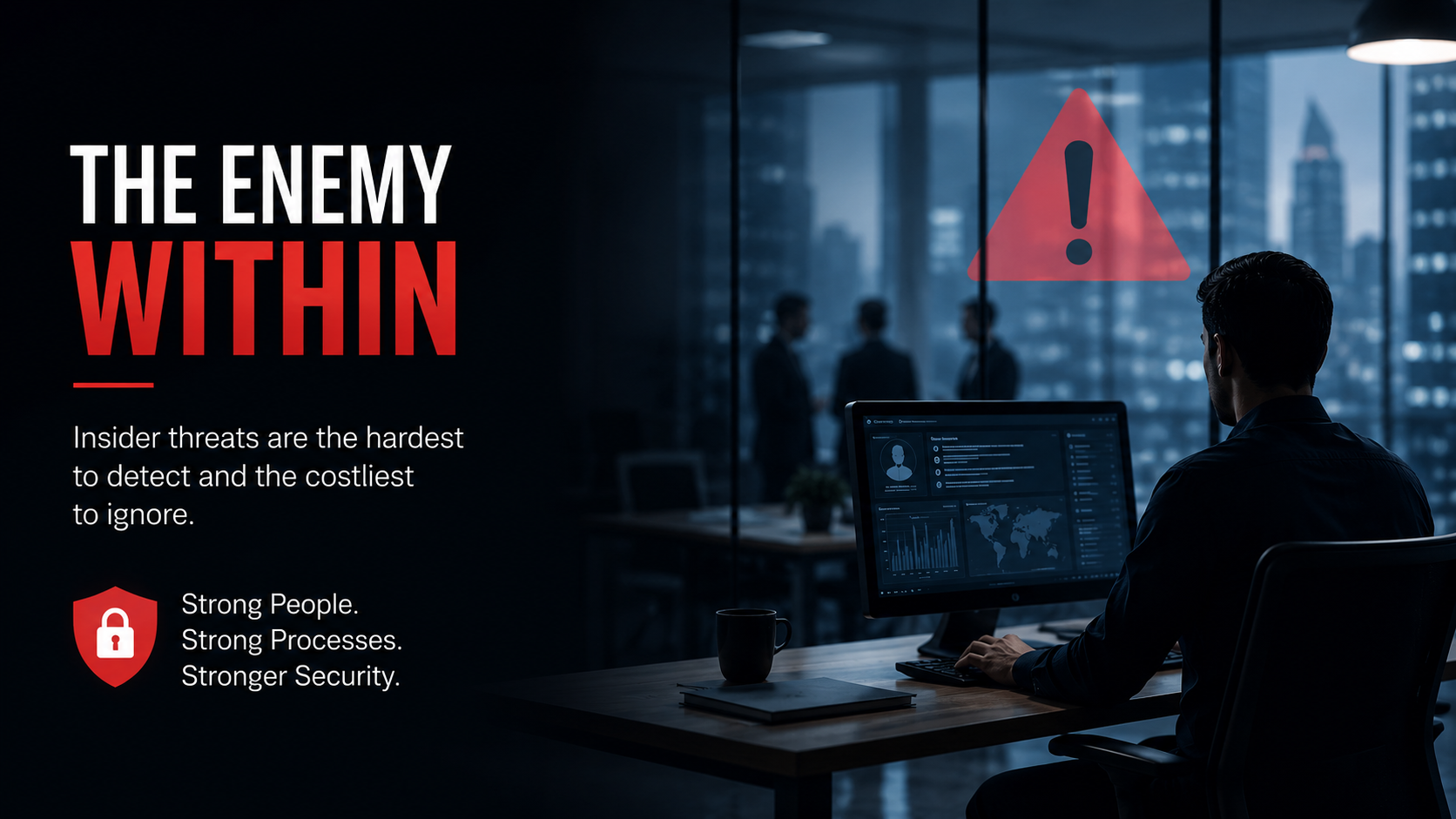
Many organizations spend millions defending against external threats, yet some of the biggest risks already exist within their own walls. During the Spanish Civil War in 1936, General Emilio Mola reportedly spoke of a "fifth column"; sympathizers inside Madrid who would support advancing forces through intelligence sharing, sabotage, and other activities. The idea was simple: a threat from within can be more effective than one attacking from the outside.
The same lesson applies to modern organizations . Cybercriminals, fraudsters, and competitors often look for weaknesses they can exploit, and sometimes your employee or other staff is either all or some of these. Weakness isn't always a vulnerable system or an exposed network; it's a trusted insider, a broken process, weak internal controls, or a culture that downplay risk.
When internal risks are ignored, the damage can be significant. Process manipulation, excessive access privileges, insider fraud, and human vulnerabilities can quietly undermine an organization's security long before an external attack succeeds.
Find a balance
Technology is important, but it is only part of the solution. Strong hiring practices, ongoing security awareness, segregation of duties, effective access controls, and a culture of accountability all play a critical role in reducing insider risk.
The strongest organizations understand that security is not just about keeping bad actors out. It's also about ensuring that trust within the organization is protected and not exploited. If you're interested in how organisations can better combat insider threats, I’ve shared my thoughts in an article linked in the comments.